
Afterimage
Wilde Gallery, Geneva, 2026
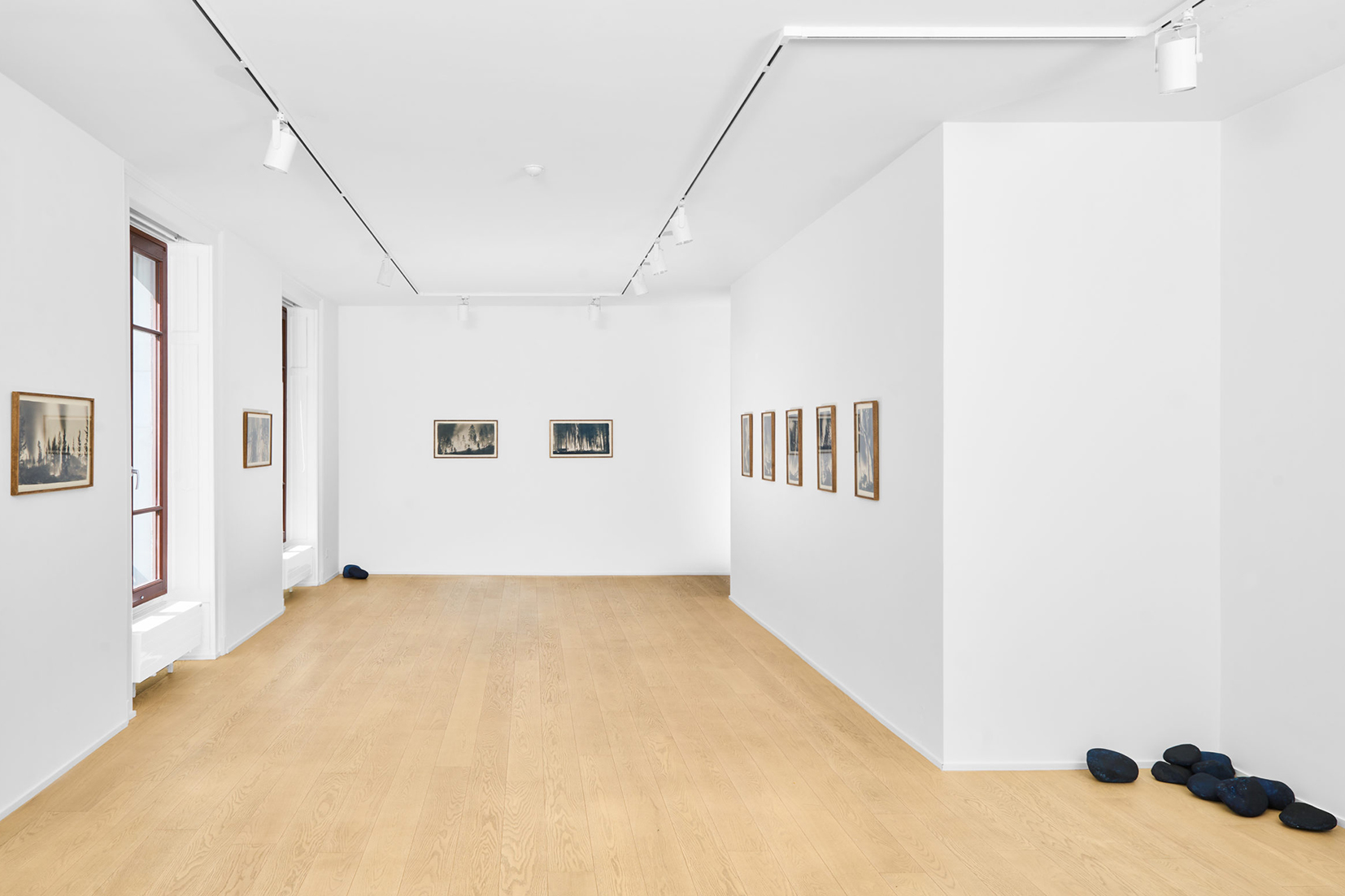
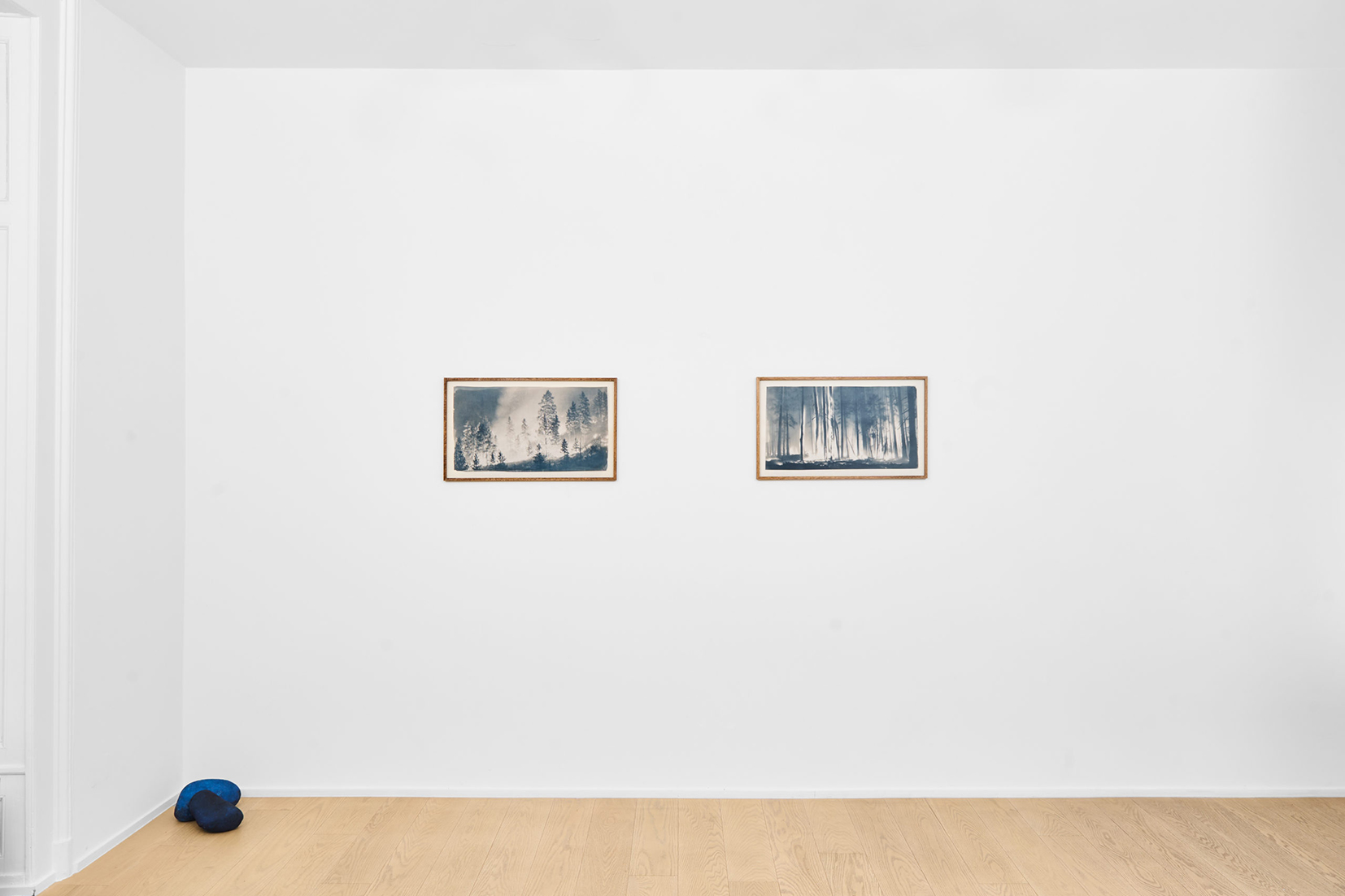
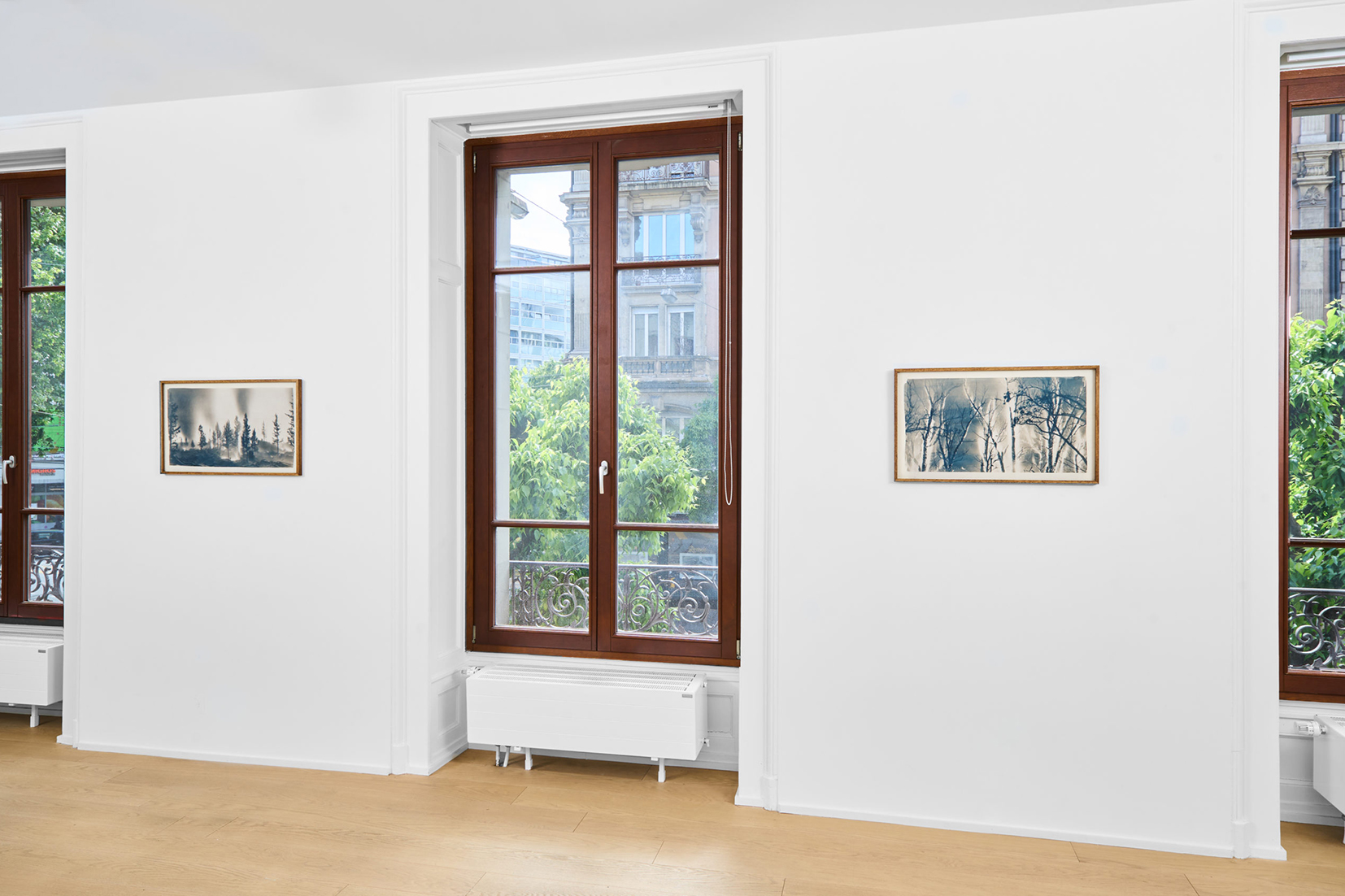
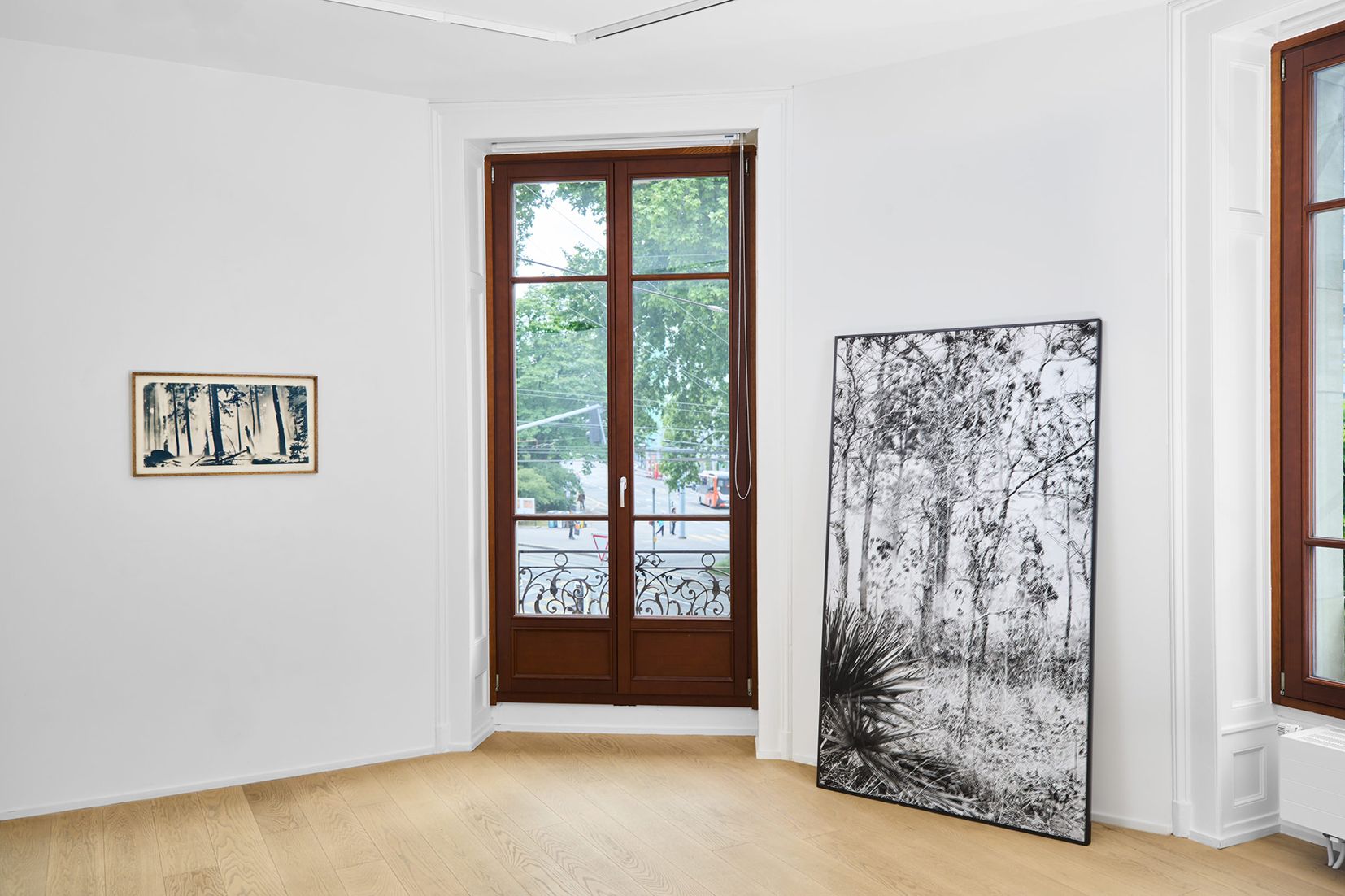
Exhibited works – Pièces exposées:
- Deep Blue Echoes, 6 cyanotypes, 2026
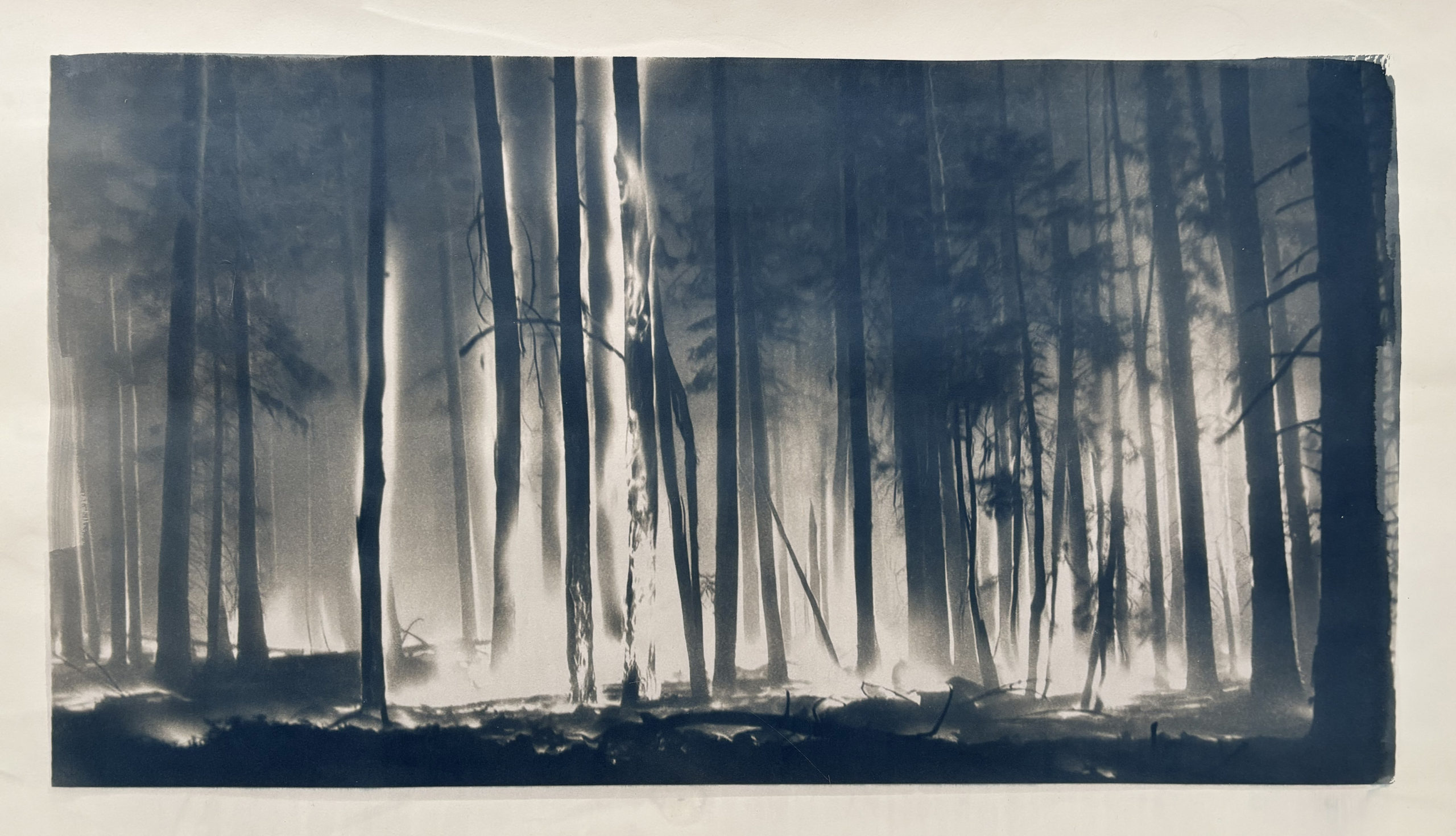
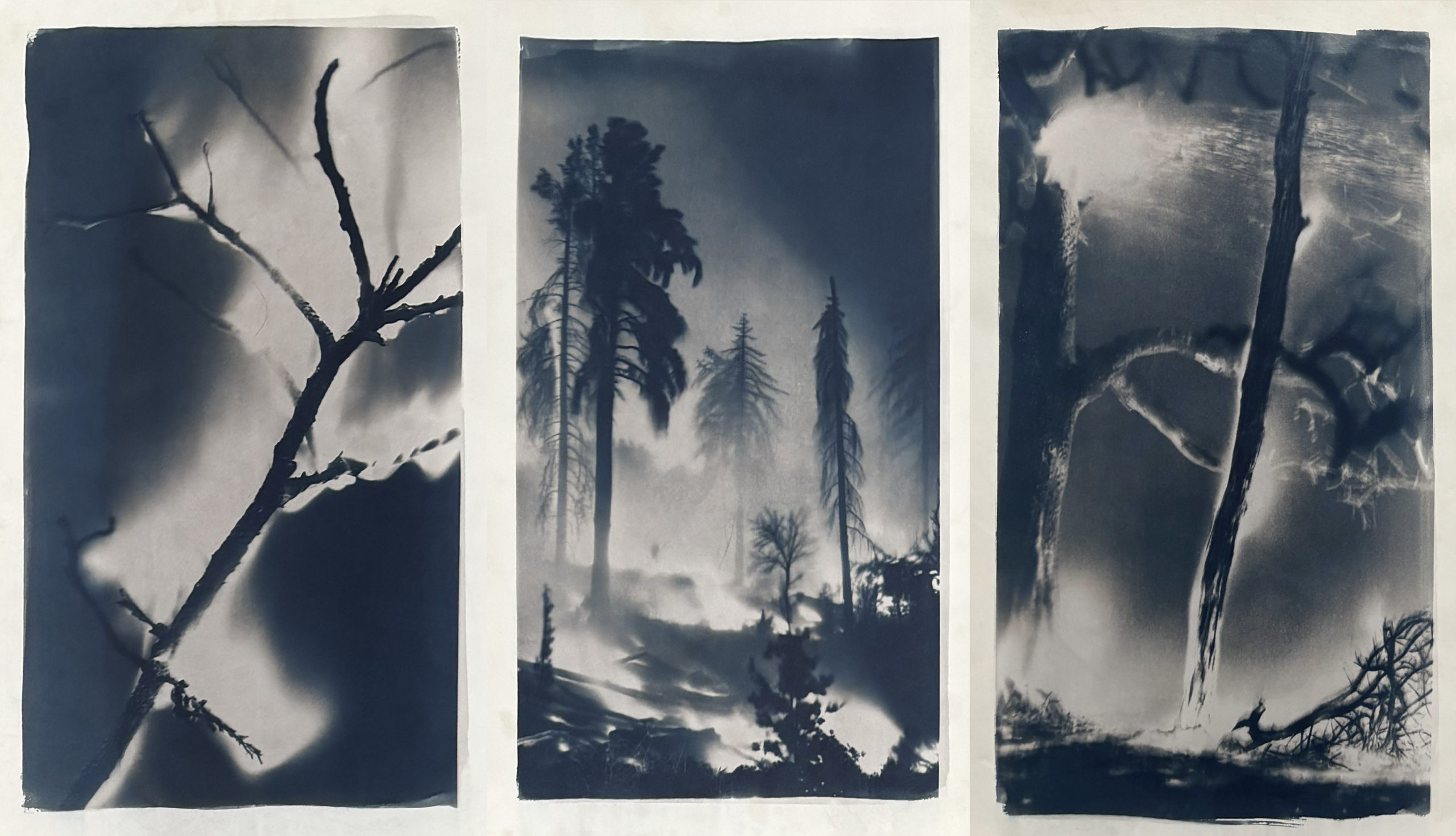
- Lightburn, 10 cyanotypes, 2026
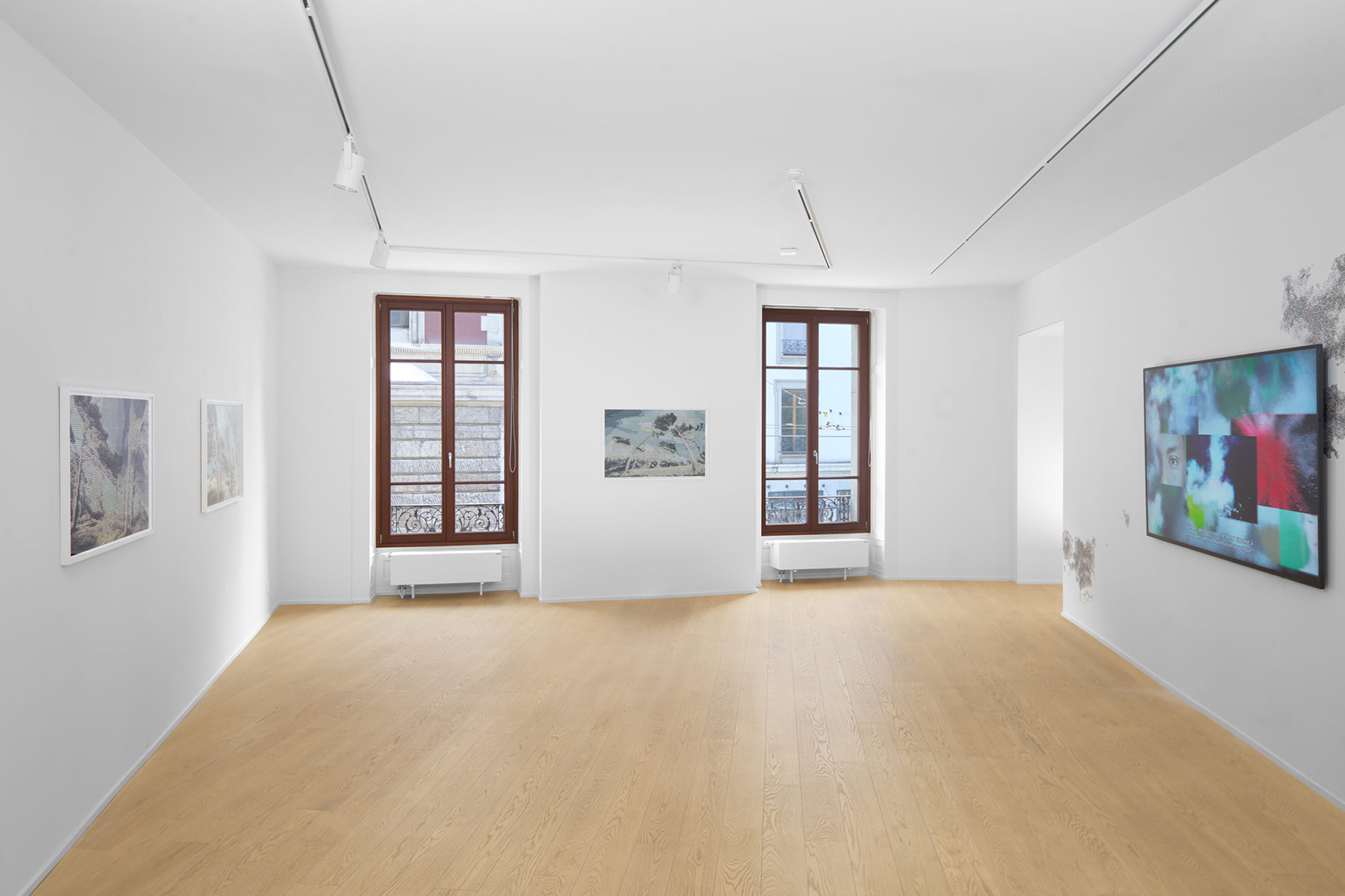
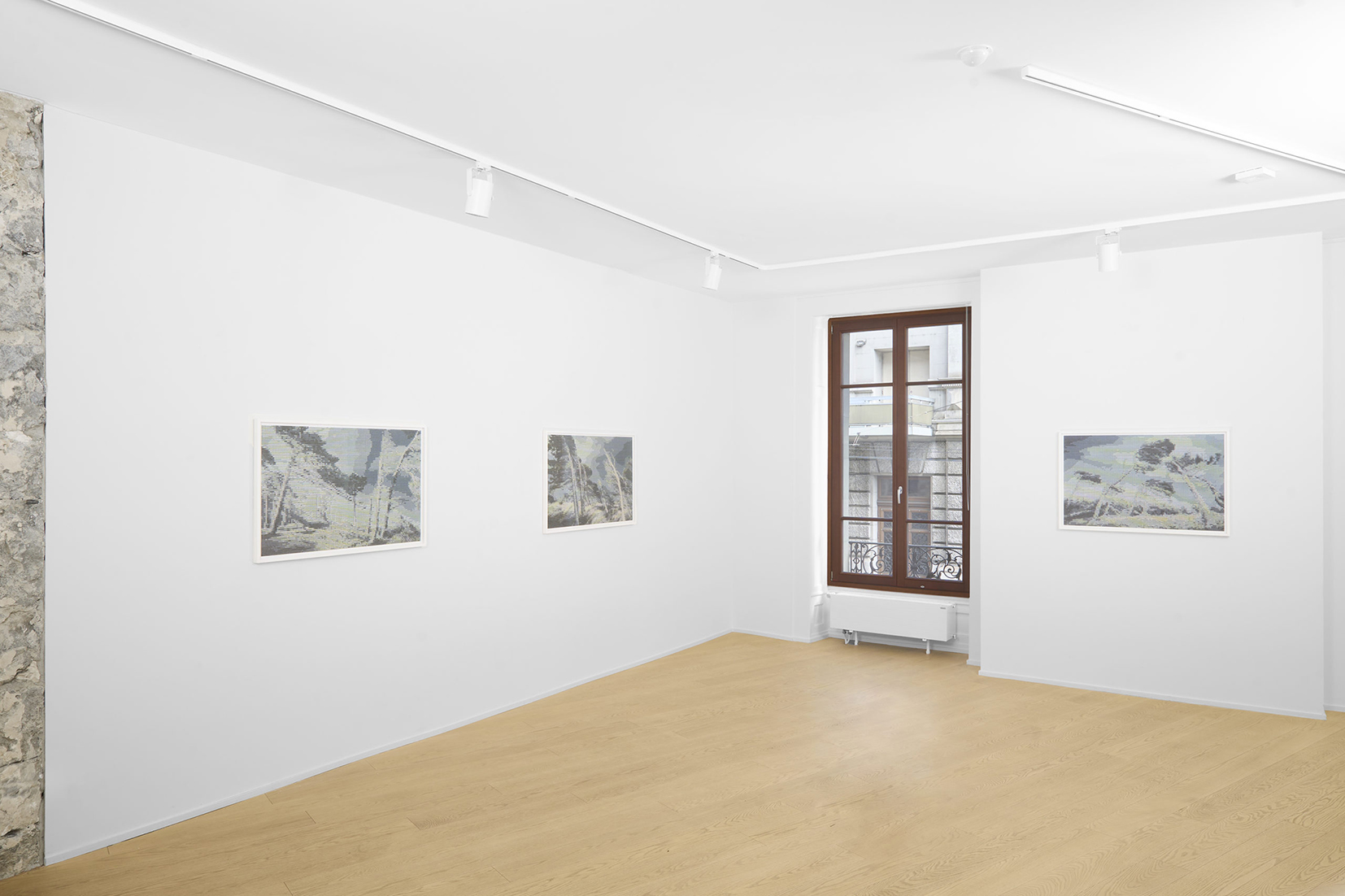
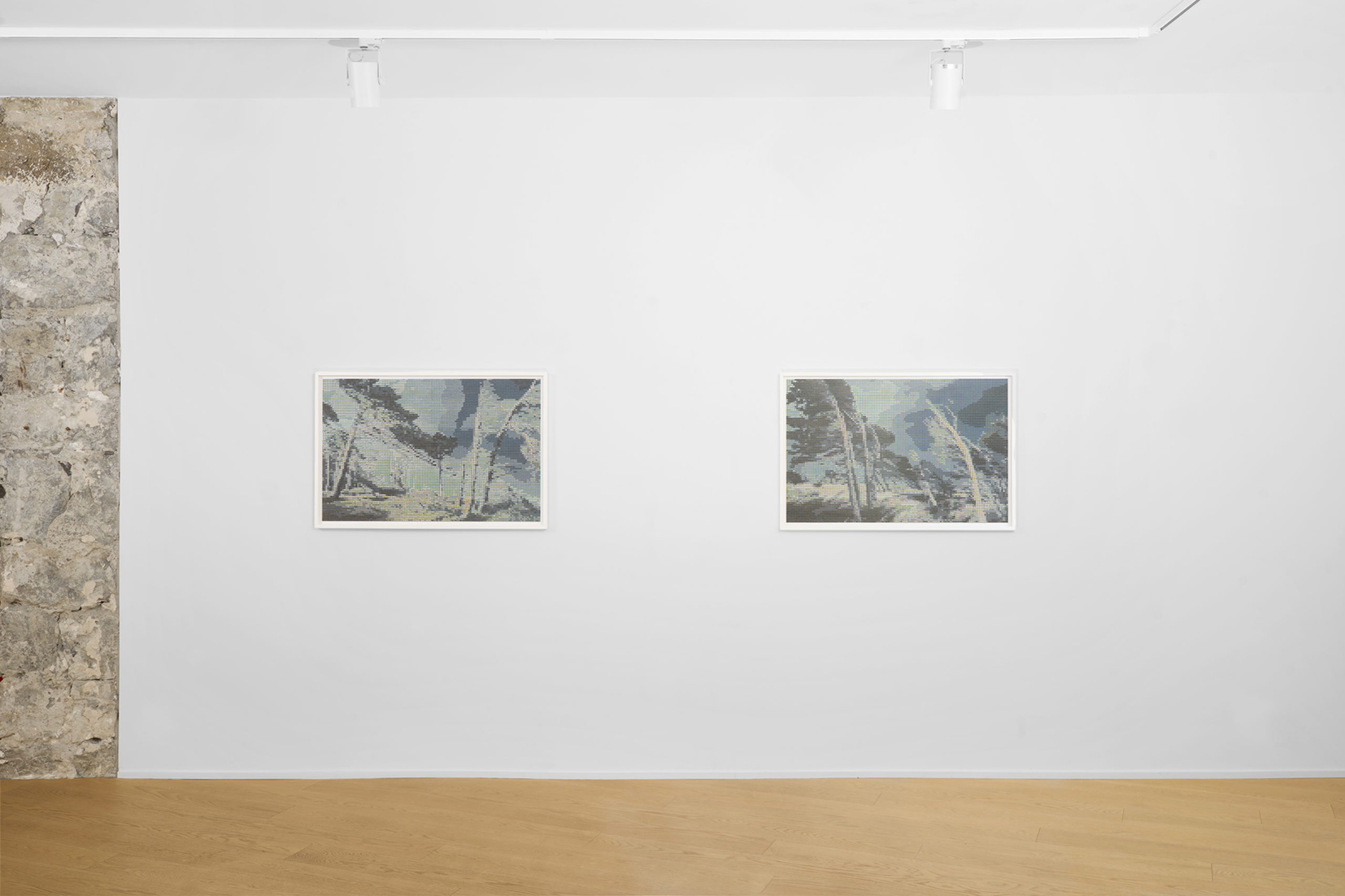
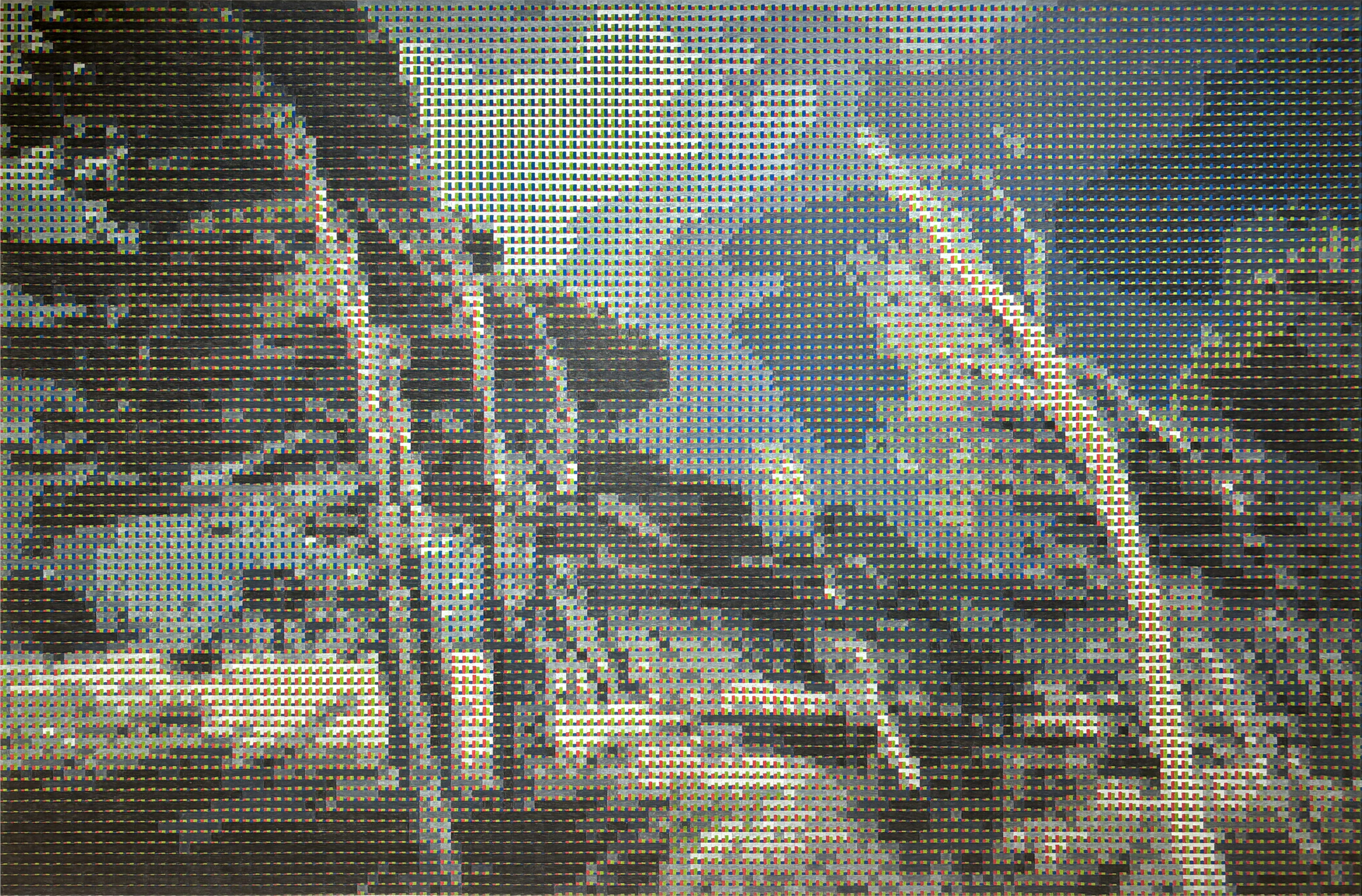
- Digital Canopy, 3 drawings, 2026
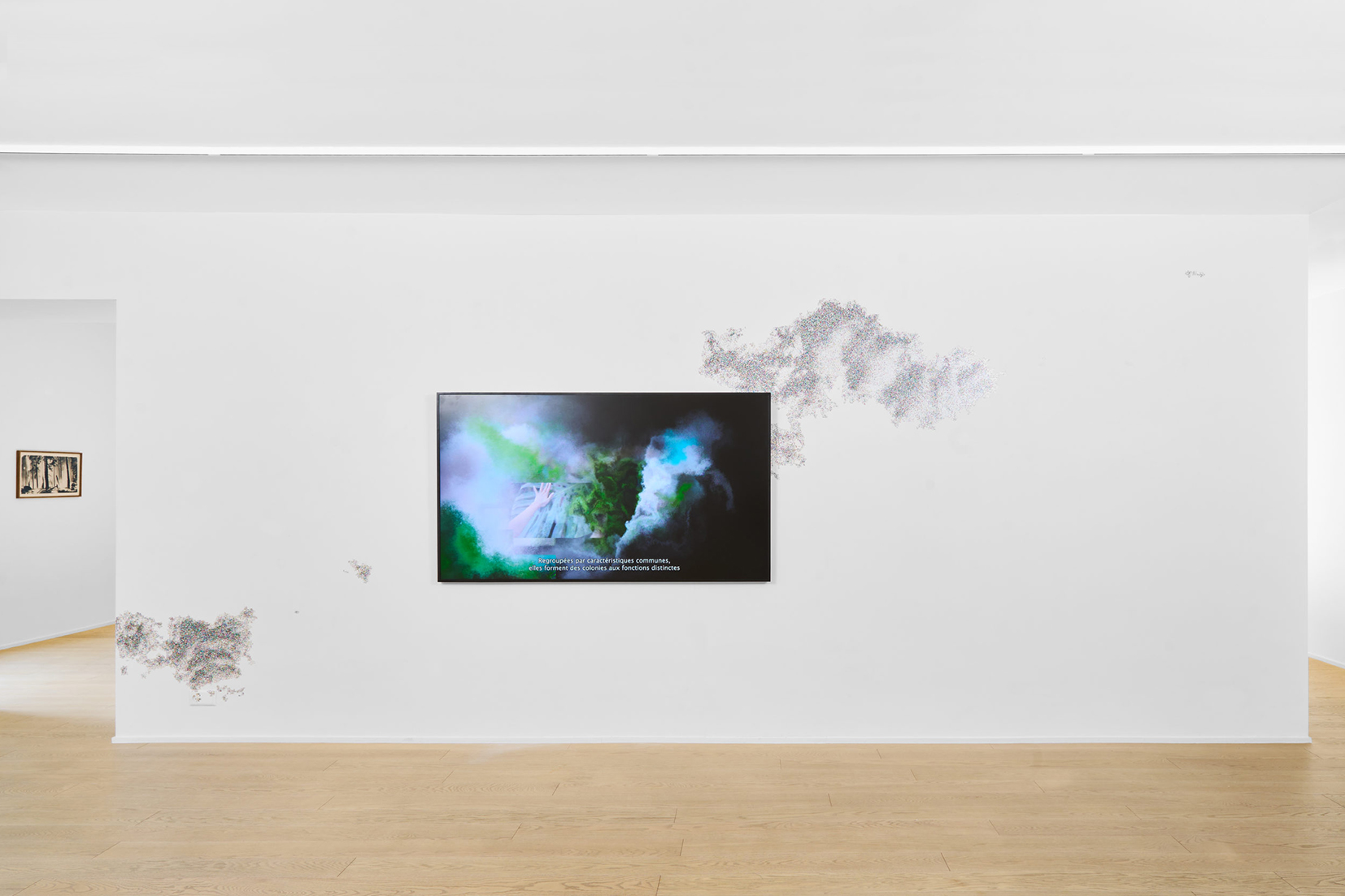
- The World Without Them, HD video, 9’02”, 2025
Afterimage
“Afterimage” refers to the visual sensation that persists after the disappearance of the light stimulus that triggered it. For its second exhibition at Wilde, collectif_fact borrows this name to explore our relationship to landscapes and the technical devices that produce them. By combining analogue processes and digital technologies, the works highlight the tensions between preservation and disappearance. Thus, they reveal the material, energetic, and extractive traces inscribed in each image.
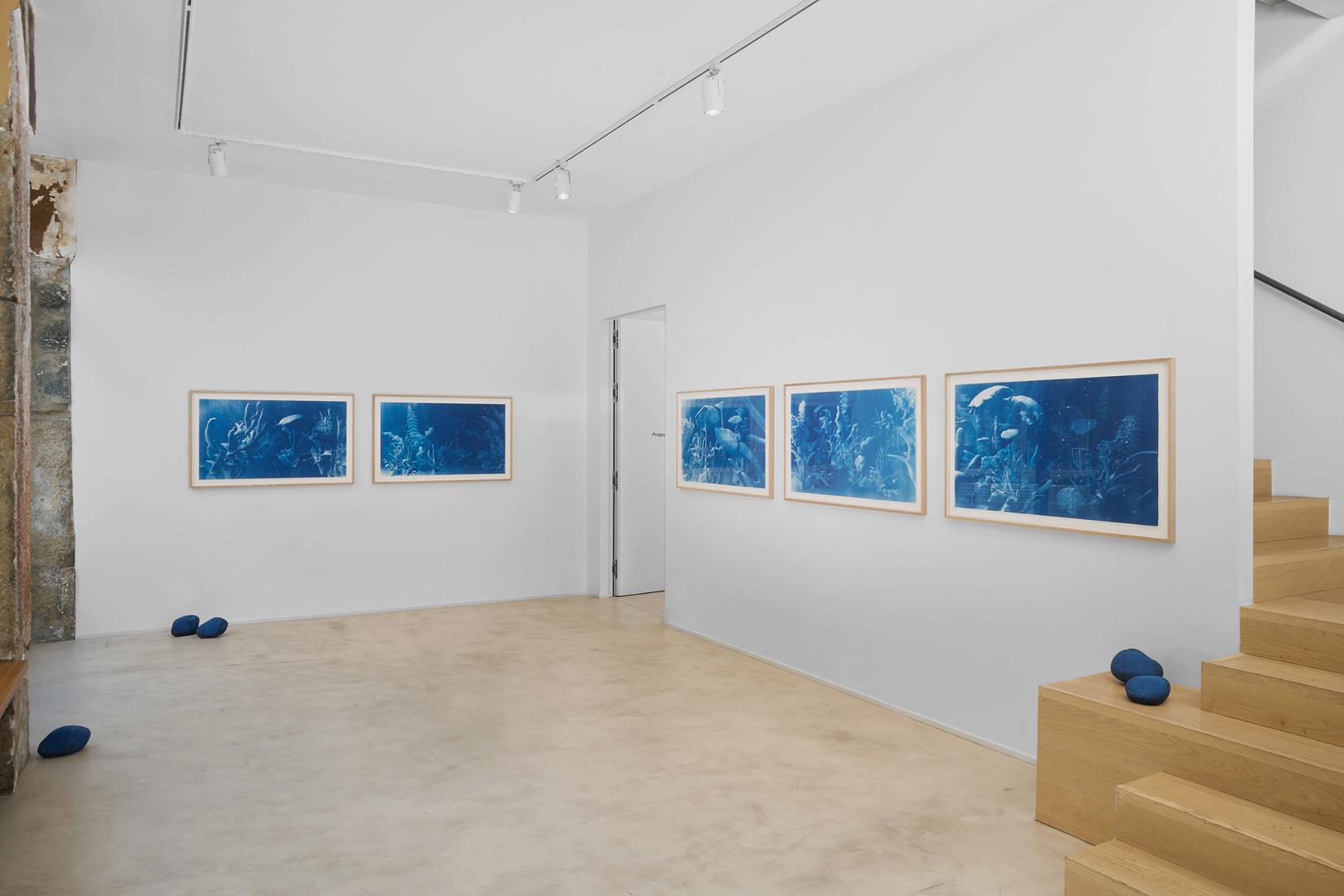
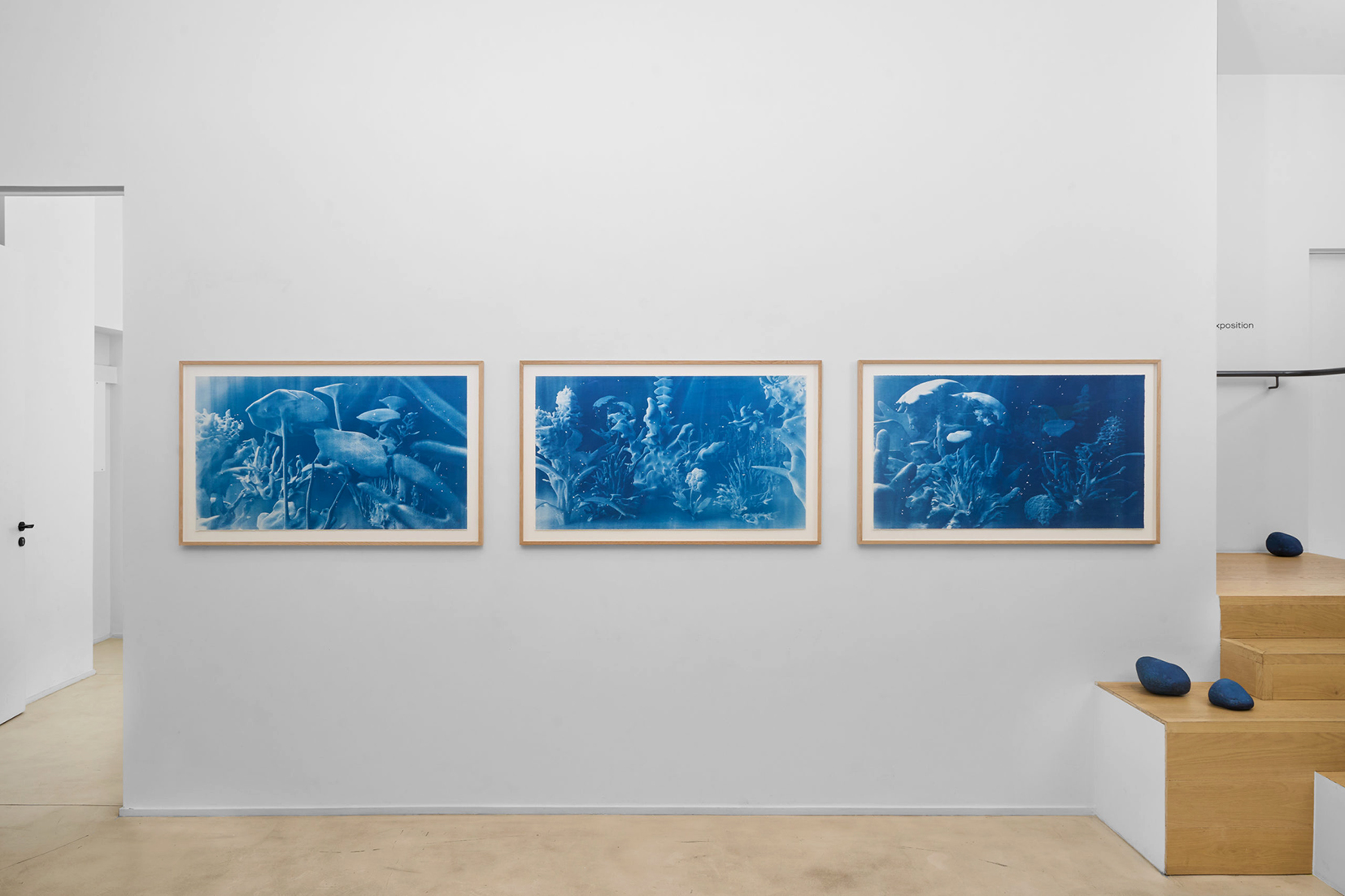
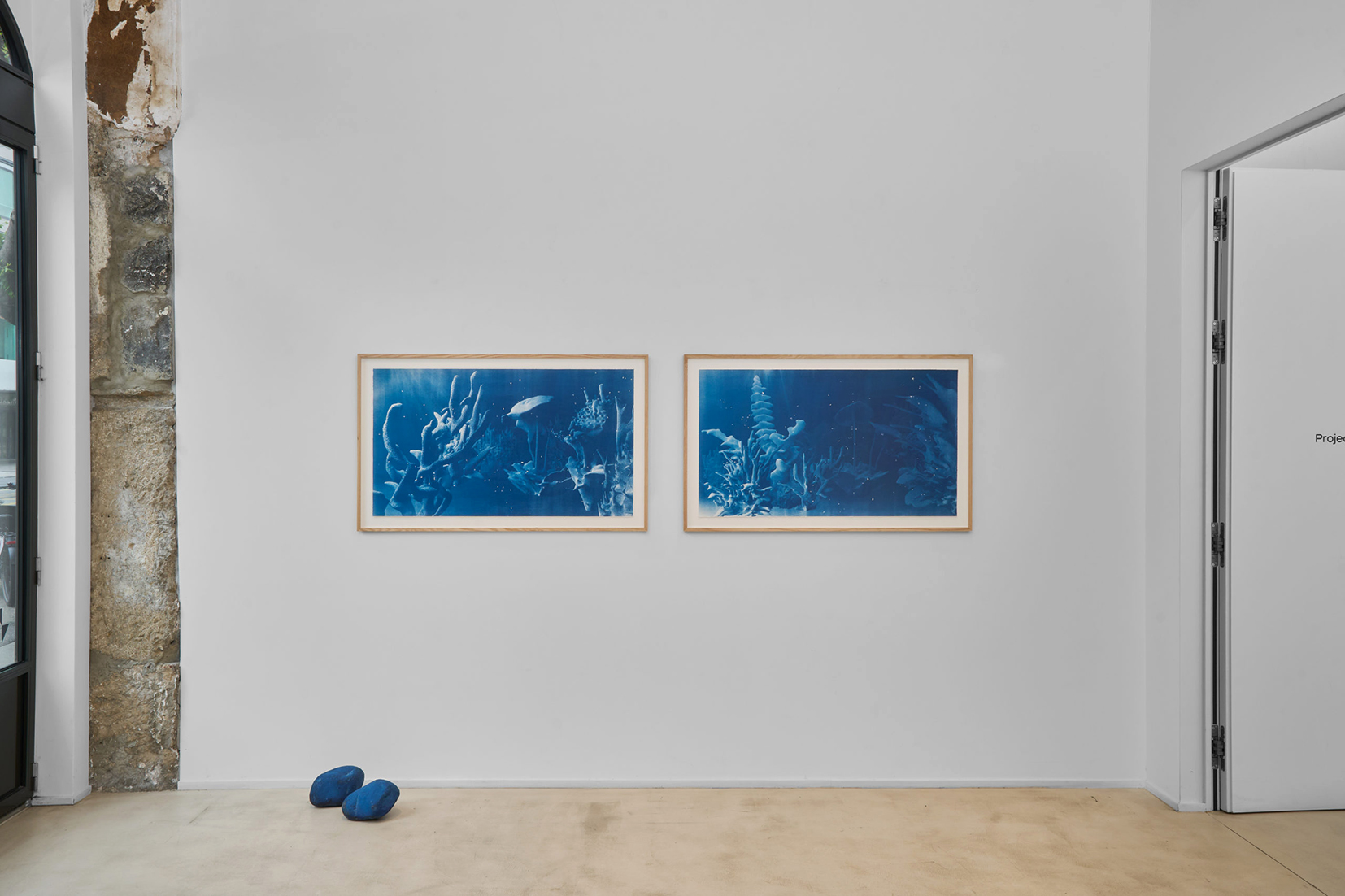
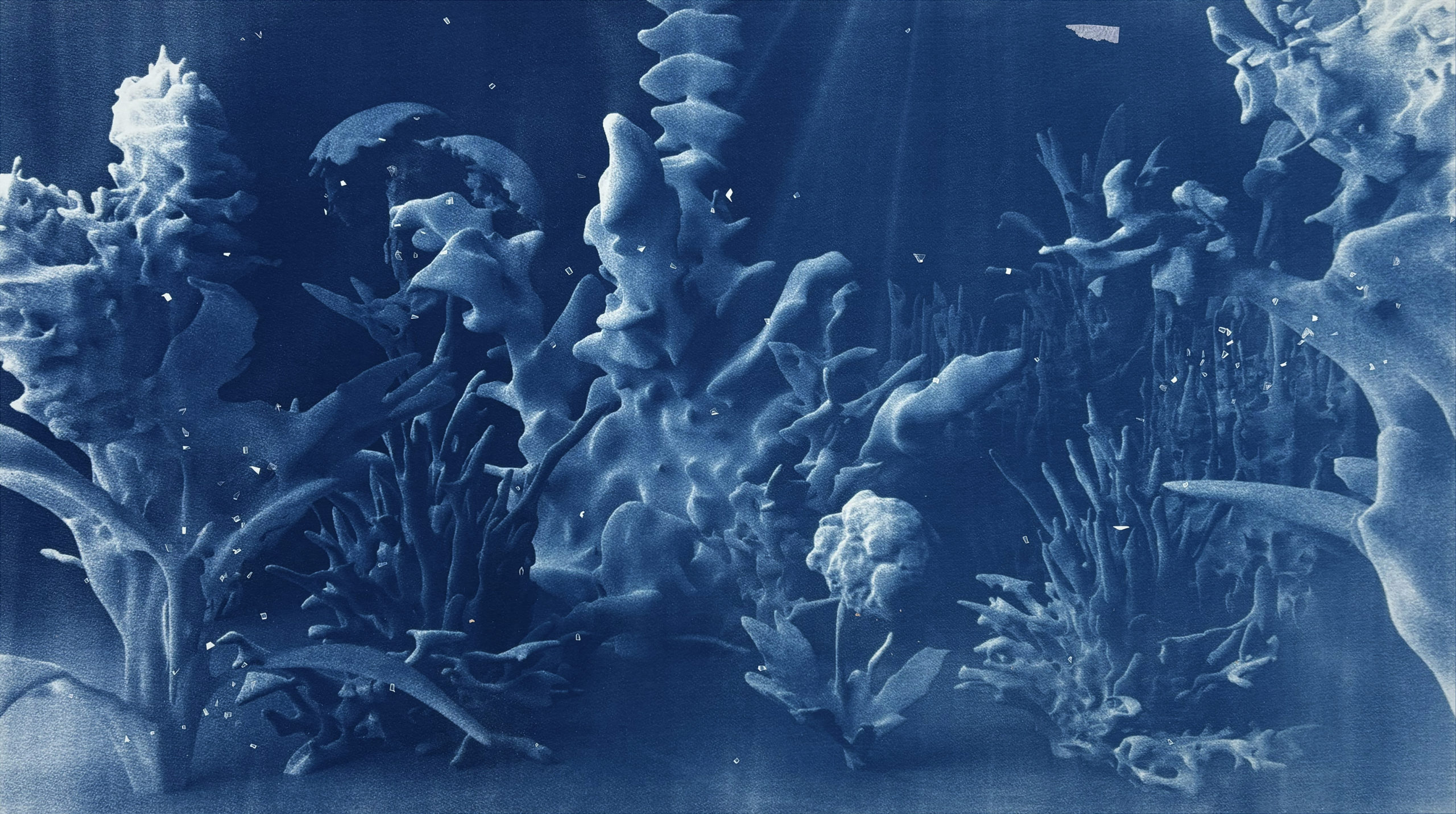
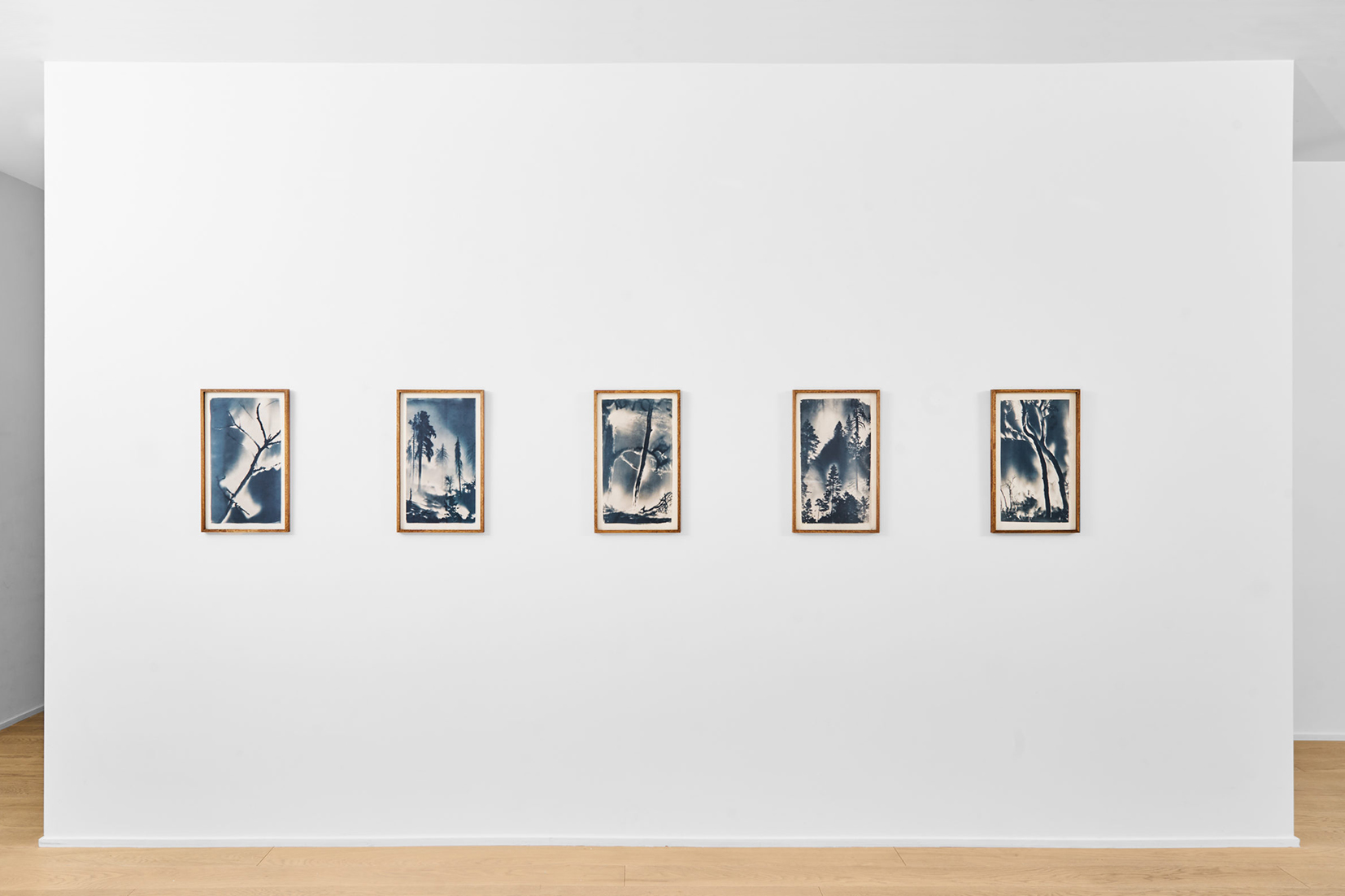
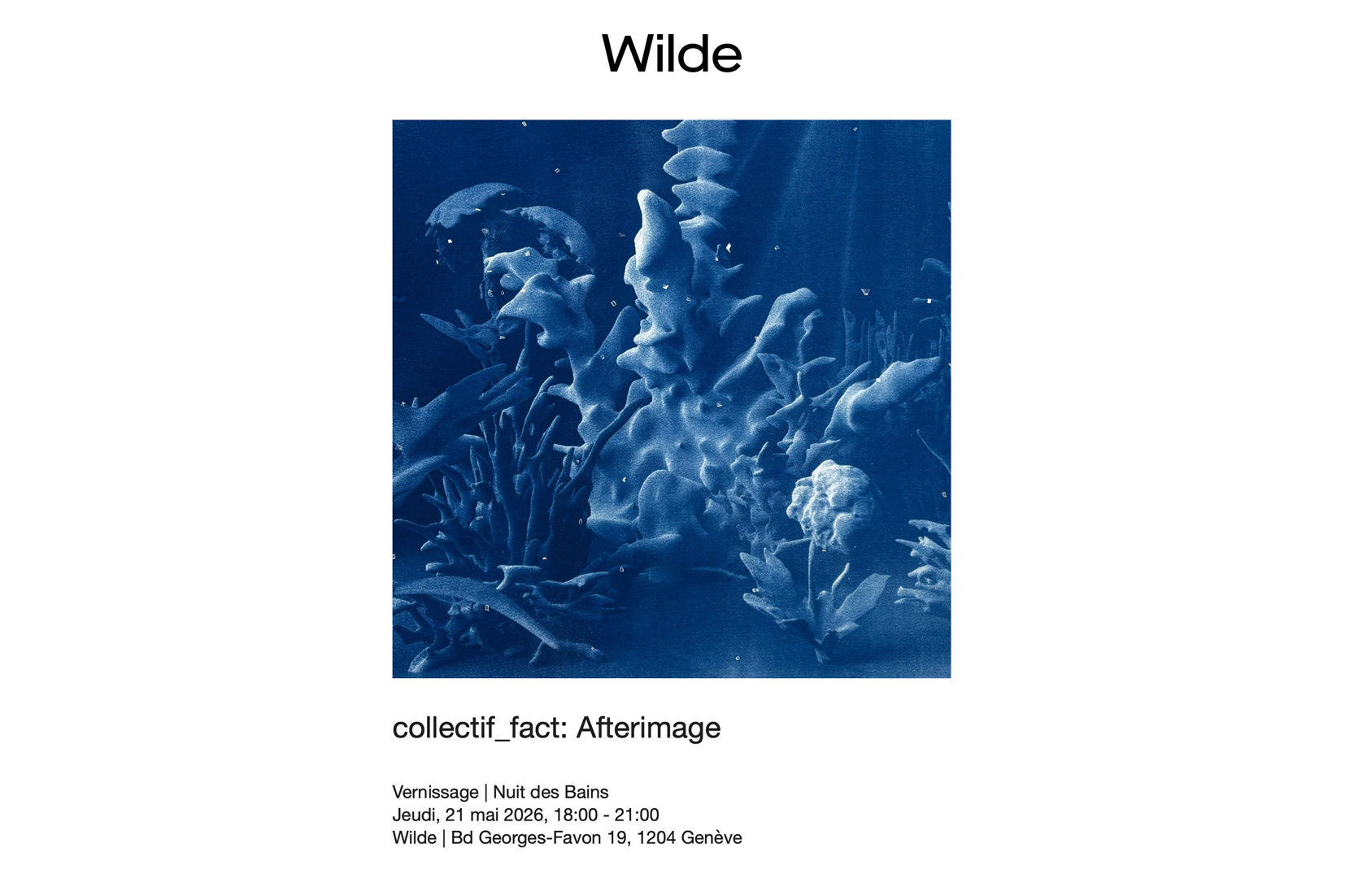
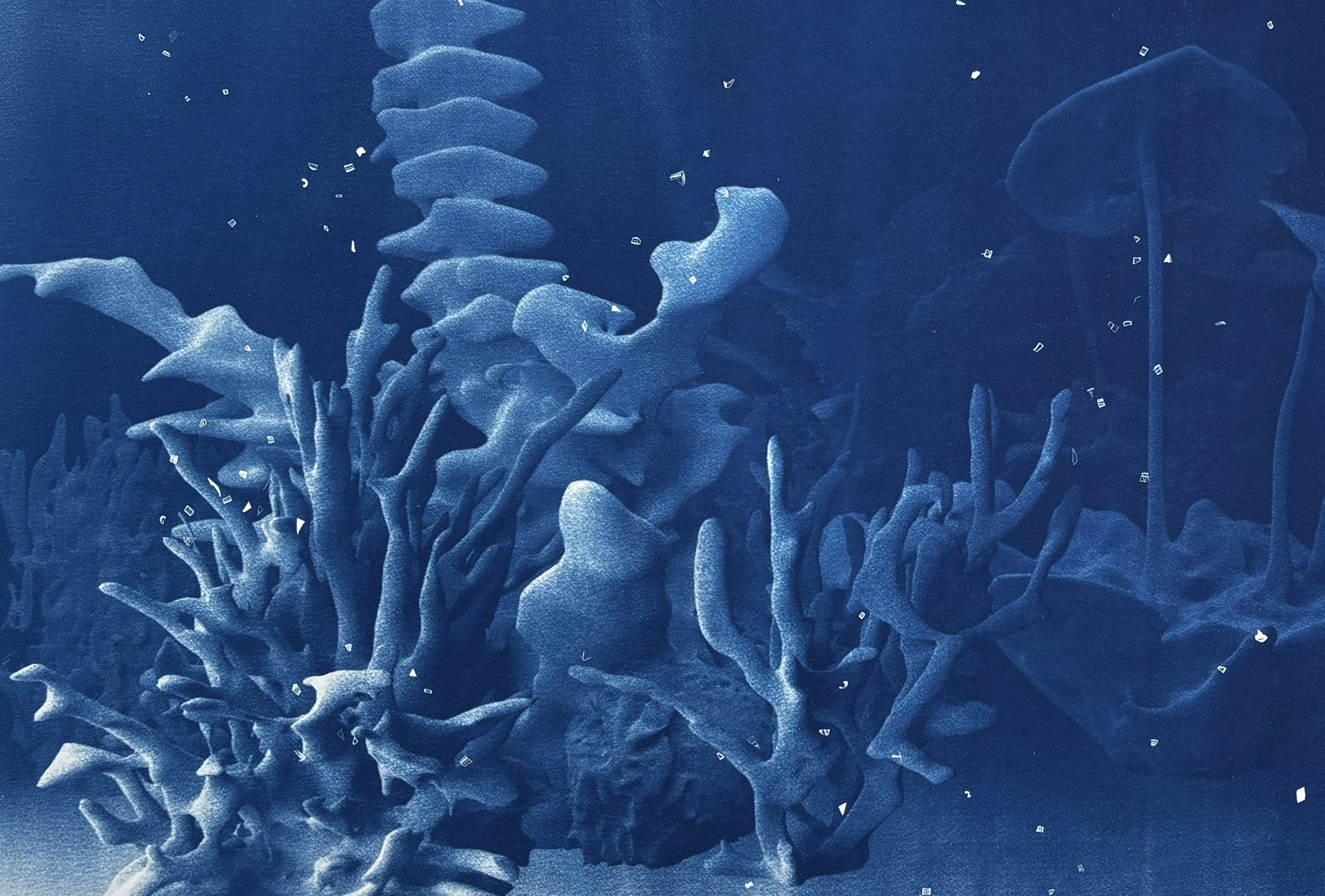
On the ground floor, the Deep Blue Echoes series immerses the visitor in the exhibition with five cyanotype prints. These prints are composed of endangered aquatic plants regenerated by artificial intelligence into three-dimensional objects. These seascapes are then printed using cyanotype with the UV light of a video projector. During the exhibition, fragments of plastic are deposited directly onto the sensitive surface, inscribing material traces of pollution into the image. This process, both analogue and digital, reveals the paradox of the energy-intensive and extractive methods used to preserve what is disappearing, marking each image with the trace of our impact. On the floor, blue pebbles extend the installation. Their hue, derived from the cyanotype technique and then from charcoal, evokes the depths of the sea while recalling a nature altered by human intervention.
Upstairs, a second series, “Lightburn”, explores the materiality of the image in the face of the destruction it documents. Video sequences of forest fires collected online serve as light sources to produce long-exposure cyanotypes, making the radiation both the subject and the agent of creation. The process incorporates charcoal, visually extending the combustion and symbolically reintroducing the remains of charred trees. Following this same logic, a forest printed on paper covers a screen. Through it, the flames accumulate, gradually consuming the image until it shifts from a dense grey to an overexposed white. Traversed by two temporalities, the installation oscillates between destruction and regeneration, where the image, like the landscape, is constantly transforming.
The final room directs attention to the role of technology, bringing together the video The World Without Them and the series of drawings Digital Canopy. Nature appears here as a territory continuously filmed and monitored. The drawings depict storm scenes captured by a digital camera. Upon closer inspection, the images reveal a grid of hand-drawn pixels, reminiscent of LCD screens that transform the world into red-green-blue sub-pixels. These sub-pixels are invisible to the naked eye, but they are at the heart of the image’s creation, beyond our direct perception. Similarly, the role of technology in climate change remains largely invisible, even though it participates profoundly in the material and energy conditions of these transformations.
This reflection continues with The World Without Them, which adopts the form of a wildlife documentary to examine the future of commercial stock photo libraries in the age of artificial intelligence. The narrator describes these images as living beings, observing their behaviours and the reasons that placed them on the endangered species list. These images are now part of our visual DNA: they feed AI algorithms and, in doing so, define our visual ecosystem.
Through these three spaces, the exhibition explores the relationships between landscape, image, and technology. The works reveal the materiality of images, the infrastructures that produce them, and the transformations they impose on our perception of the world. Between capture, alteration, and reconstruction, they question how technical systems define our relationship to the living world and gradually shift the human gaze toward a machine-mediated perception.
“Afterimage” désigne la sensation visuelle qui persiste après la disparition du stimulus lumineux qui l’a provoquée. Pour sa deuxième exposition chez Wilde, collectif_fact emprunte ce nom afin d’explorer notre relation aux paysages et aux dispositifs techniques qui les produisent. En associant procédés analogiques et technologies numériques, les œuvres mettent en lumière les tensions entre préservation et disparition. Ainsi, elles révèlent les traces matérielles, énergétiques et extractives inscrites dans chaque image.
Au rez-de-chaussée, la série Deep Blue Echoes plonge le visiteur dans l’exposition avec cinq impressions en cyanotype. Celles-ci sont composées de plantes aquatiques en voie de disparition et re-générées par l’intelligence artificielle sous forme d’objets tridimensionnels. Ces paysages marins sont ensuite imprimés en cyanotype grâce à la lumière UV d’un projecteur vidéo. Durant l’exposition, des fragments de plastique sont déposés directement sur la surface sensible, inscrivant dans l’image des traces matérielles de pollution. Ce procédé, à la fois analogique et numérique, révèle le paradoxe des méthodes énergivores et extractives mobilisées pour préserver ce qui disparaît, marquant chaque image de la trace de notre impact. Au sol, des galets bleus prolongent l’installation. Leur teinte, issue de la technique du cyanotype, puis du charbon, évoque les profondeurs marines tout en rappelant une nature altérée par l’intervention humaine.
À l’étage, une seconde série, Lightburn, explore la matérialité de l’image face à la destruction qu’elle documente. Des séquences vidéo d’incendies de forêt collectées en ligne servent de sources lumineuses pour produire des cyanotypes par longue exposition, faisant de l’irradiation à la fois le sujet et l’agent de la création. Le procédé incorpore du charbon, prolongeant visuellement la combustion et réintroduisant, de manière symbolique, les résidus d’arbres calcinés. Dans cette même logique, une forêt imprimée sur papier vient recouvrir un écran. À travers elle, les flammes s’accumulent, consumant progressivement l’image jusqu’à la faire basculer d’un gris dense à un blanc surexposé. Traversée par deux temporalités, l’installation oscille entre destruction et régénération, où l’image, comme le paysage, se transforme continuellement.
La dernière salle oriente l’attention vers le rôle de la technologie, réunissant la vidéo The World Without Them et la série de dessins Digital Canopy. La nature y apparaît comme un territoire continuellement filmé et surveillé. Les dessins représentent des scènes de tempête captées par une caméra numérique. En s’approchant, les images révèlent une grille de pixels tracés à la main, rappelant les écrans LCD qui transforment le monde en sous-pixels rouge-vert-bleu. Ces sous-pixels sont invisibles à l’œil, mais ils sont au cœur de la fabrication de l’image, hors de notre perception directe. De la même façon, le rôle de la technologie dans les changements climatiques reste largement invisible, alors qu’il participe en profondeur aux conditions matérielles et énergétiques de ces transformations.
Cette réflexion se prolonge avec The World Without Them, qui adopte la forme du documentaire animalier pour interroger l’avenir des banques d’images commerciales à l’ère de l’intelligence artificielle. Le narrateur décrit ces images comme des êtres vivants, observant leurs comportements et les raisons qui les ont placées sur la liste des espèces en voie de disparition. Ces images font aujourd’hui partie de notre ADN visuel : elles alimentent les algorithmes d’IA et, par ce biais, définissent notre écosystème visuel.
À travers ces trois espaces, l’exposition explore les relations entre paysage, image et technologie. Les œuvres révèlent la matérialité des images, les infrastructures qui les produisent et les transformations qu’elles imposent à notre perception du monde. Entre captation, altération et reconstitution, elles interrogent la manière dont les systèmes techniques définissent notre rapport au vivant et déplacent progressivement le regard humain vers une perception médiée par la machine.